There’s a particular kind of surface chaos that builds up slowly and then all at once. One ring left beside the sink. A lip balm on the windowsill. A couple of hair clips on the bathroom shelf with no particular reason for being there. None of it dramatic just the low level visual clutter of a home that hasn’t been given enough small containers.
I solved a large portion of this problem with clay trays. Not intentionally not as part of a decorating plan I bought one because it was on a market stall for £6 and it had a colour I liked a sort of warm terracotta that looked handmade. I put it on my bedside table for my rings and earrings. Within a week I’d bought two more for other surfaces and now I have several dotted around the house in spots I never thought needed anything.
They’re one of those objects that sounds too small to matter until you have them and can’t quite remember what the surface looked like before.
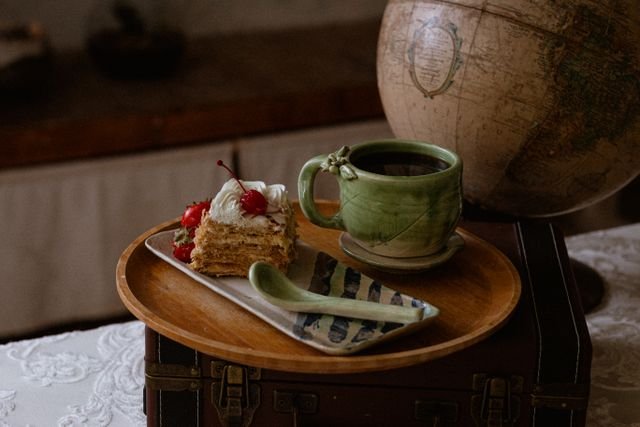
Why a clay tray does something a plain surface doesn’t
It comes down to containment. When small objects jewellery coins keys a candle a lip balm sit directly on a surface without a container they read as scattered even if there are only three or four items. Put the same objects inside a small tray and the group reads as intentional. The eye sees a considered arrangement rather than abandoned clutter.
Clay trays specifically do something extra that plastic or metal containers don’t always manage: they look handmade. Even the ones that come from large retailers have a slight irregularity an uneven rim, a subtle texture a colour that shifts slightly across the surface that mass produced plastic can’t replicate. That handmade quality is what makes them feel warm rather than merely functional.
Where they actually earn their place
Bedside table
The classic use. Rings earrings a hair tie a lip balm a small piece of jewellery you take off before sleeping. A clay tray here means none of those things roll off the table at 11pm.
Bathroom shelf or vanity
Soap bars small bottles hairpins bobby pins. Anything that usually migrates to random corners of the sink. One tray corrals it without making the space feel clinical or over organised.
Entryway console or hook area
Keys loose change a spare hair band. The things that end up everywhere when there’s no defined spot for them. A small tray here is the entry level version of an organised entryway.
Coffee table or shelf styling
Not purely for function a clay tray used as a base for a small candle a stone a sprig of dried botanicals reads as styled and considered. Anchors a vignette without looking like it’s trying too hard.
Kitchen counter
Beside the hob for wooden spoons or beside the kettle for teabags and a small spoon rest. Adds warmth to a surface that’s usually all hard practical materials.
Desk or workspace
Pens a USB stick a lip balm paper clips. The small items that drift across a desk surface and make it feel cluttered even when the desk itself is tidy.
The different types and what suits what
Terracotta / raw clay
Unglazed warm orange brown tones. The most organic looking option. Not waterproof so better for dry surfaces bedside tables shelves desks rather than wet bathroom edges or near a sink.
White or off white ceramic clay
Clean minimal works in almost any room. Slightly more formal than terracotta. Often glazed which means water resistant and easier to wipe clean good for bathrooms and kitchens.
Sage or muted earthy tones
The colour that pairs with almost everything. A muted sage, dusty blue, or mushroom grey clay tray disappears into a room in the best possible way present without demanding attention.
Dark clay or charcoal
More dramatic suits moody or modern interiors. Particularly striking when used for pale or metallic objects like silver jewellery or white taper candles where the contrast is visible.
Speckled or multi toned
The most handmade looking option. Slight variations in colour and texture across the surface the kind of thing that comes from small ceramicists and independent makers. Looks beautiful on a well lit shelf.
Marbled or dipped glaze
A more decorative option glaze that pools or drips gives an expressive slightly unpredictable finish. Suits eclectic or maximalist interiors. More of a visual statement than a quiet presence.
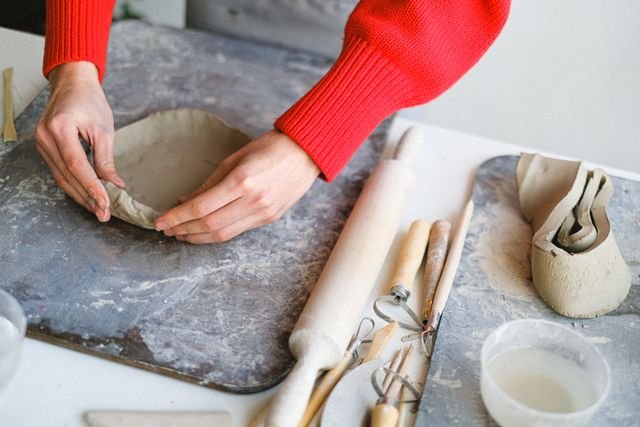
How to style a clay tray so it looks considered, not abandoned
Choose the right size for the surface
A tray that’s too small for the surface it sits on looks lost one that’s too large overwhelms the area and leaves nothing around it to breathe. As a rule of thumb: the tray should take up roughly one third to one half of the surface area leaving space for at least one other object beside it (a lamp, a plant, a book) without things feeling crowded.
Edit what lives in it three to five items maximum
A clay tray only works as a containment and styling tool if it’s not overfull. More than five objects and the tray stops reading as a considered collection and starts reading as a different kind of clutter just slightly elevated. Keep daily use items in it everything else finds a drawer.
Mix textures and heights within the tray
A flat tray with only flat objects a few coins a card some earrings looks like a surface with a rim. Adding one slightly taller element (a small candle, a ring holder, a little vessel) gives the arrangement dimension and makes it read as styled rather than stored.
Keep the colour palette consistent
The objects in a clay tray don’t all need to be the same colour, but they work best if they share a tone or temperature all warm or all neutral or all muted. A bright plastic hair clip sitting in an otherwise warm, earthy terracotta tray with gold jewellery and a cream candle will always look slightly out of place. Swap it for a tortoiseshell clip and the whole arrangement settles.
Mistakes that are easy to make
Using an unglazed tray in a wet environment
Unglazed terracotta is porous. A wet soap bar sitting in an unglazed tray will leave a damp patch that eventually stains the clay and can cause the tray to crack if the moisture gets into the base and dries out repeatedly. Always check whether a tray is glazed on the inside before using it in a bathroom or kitchen context or keep it for dry surfaces only.
Overfilling to the point of defeat
A tray crammed with seventeen small objects does the opposite of what a tray is supposed to do it creates contained clutter rather than resolving it. If everything in the tray is too important to remove the tray is too small or you have too many things. Editing what lives in it is the whole maintenance habit.
Buying a tray for the sake of styling without a real use for it
A clay tray that has no clear daily purpose in the spot you’ve placed it will gradually accumulate random objects that have nothing to do with each other and within a month it’ll look like the surface without the tray. The best trays have a job: jewellery tray key tray, soap tray. Define the job first then find the tray for it.