There was a wall in my living room, the one beside the bookshelf just past the sofa, that I had been meaning to do something with since we moved in. I had saved about two hundred photos of gallery walls, looked at original art, and priced custom prints. Everything either looked wrong, cost more than I wanted to spend, or required a commitment to a specific look I was not entirely sure I was ready for. It was not until I discovered printable wall art that I realised I had been massively overcomplicating the whole thing from the very beginning.
Then a friend told me she’d printed four botanical illustrations from an Etsy shop, paid about £8 total for all four files, had them printed at a local print shop for £12, framed them in IKEA frames, and the result looked better than anything I’d seen her buy from a homeware shop at ten times the price.
I went home and started downloading that same evening. Three years later printable art is my most used decorating tool in my own home and when I’m advising friends on theirs. The learning curve is smaller than it looks and the results are genuinely impressive if you understand a few things about how to do it properly.
What printable wall art actually is and what it isn’t
A printable is a digital file usually a high resolution PDF or JPEG that you download and then either print yourself or have printed by a print shop or online printing service. You’re paying for the design file not a physical product. This is why they’re so much cheaper than finished prints.
The quality of the result depends on two things: the quality of the original file, and the quality of your print. A great file printed poorly looks disappointing. A mediocre file printed beautifully still looks mediocre. Understanding both sides of this equation is most of what there is to know.
The styles that work best as printables
Botanical illustrations
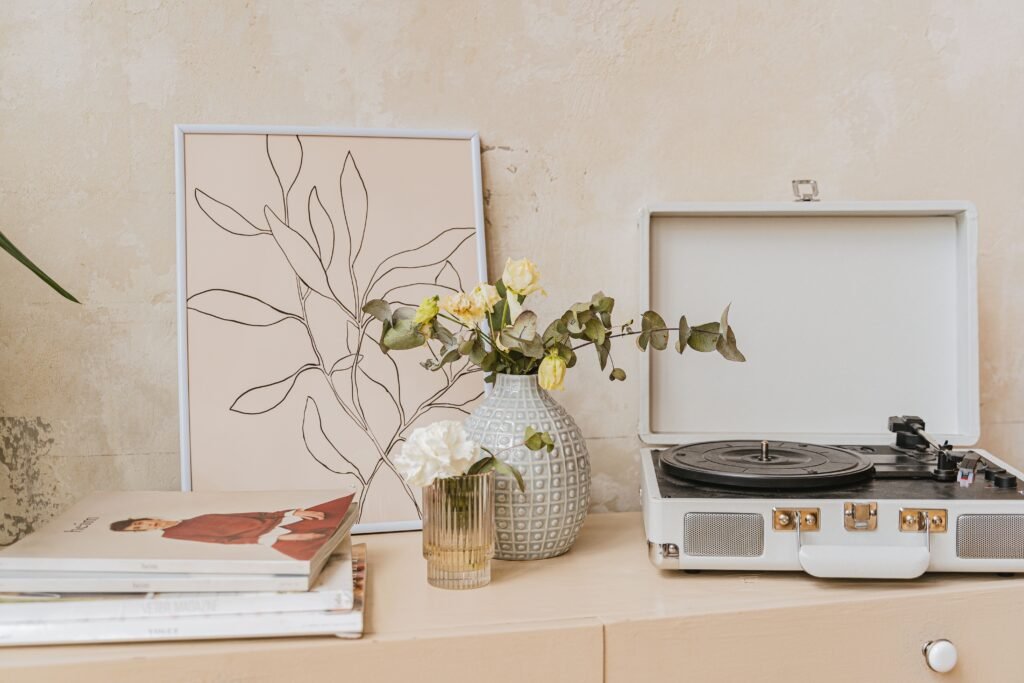
The most popular category and for good reason. Botanical prints translate beautifully to paper look sophisticated in any frame and suit almost every interior style from minimal to maximalist.
Maps and typographic prints
City maps vintage world maps street maps of meaningful locations. Work well at larger sizes and as focal point prints rather than in groups. A map of a city that matters to you is always more interesting than generic wall text.
Abstract art
Digital abstract prints range from terrible to genuinely beautiful, so quality varies more here than in other categories. Worth previewing at full size before downloading.
Photography
Architectural nature travel, still life. High resolution photography prints exceptionally well and can be sourced from stock photo libraries as well as dedicated print shops.
Line art and minimalist illustration
Single line drawings minimal botanical sketches simple geometric forms. Print beautifully look expensive with the right frame and suit modern and Japandi influenced interiors especially well.
Vintage and archival prints
Out of copyright illustrations vintage advertisements old scientific diagrams. Much of this is available free through public domain archives which is genuinely one of the bestkept secrets in home decorating.
Where to find printable art free and paid
- Free
- Wikimedia Commons Enormous archive of public domain images including vintage botanical illustrations maps and fine art reproductions. Search by subject or era. Download the highest resolution available.
- The British Museum Collection The BM’s online collection includes thousands of downloadable high resolution images that are free for personal use. A genuinely extraordinary resource most people have never heard of for this purpose.
- Rawpixel Public Domain A curated public domain image library with excellent search functionality and genuinely high quality vintage illustrations botanical prints and art. Much easier to navigate than raw Wikipedia archives.
- Paid
- Etsy printable shops Etsy is the largest marketplace for paid printable wall art and the range available is genuinely impressive. Prices range from as little as £1 to over £20 per file depending on the seller and the style. Just make sure to read the reviews carefully, look at the actual preview image at full size, and always check the file dimensions before completing your purchase.
- Creative Market Creative Market is a design marketplace with a strong and well curated collection of premium printable wall art sets. The options here tend to feel more original and distinctive than a lot of what you find on Etsy’s more mass market listings. Prices are generally a little higher but the quality reflects that difference and is usually worth it.
Step by step: from download to wall
Decide your frame size before choosing the art
This sounds backwards but it’s the right order. Standard frame sizes (A4, A3, A2, 50x70cm, 8×10 inches) are cheapest and most available. If you choose art first and then discover it’s an awkward size for any standard frame you’re either commissioning a custom frame or printing at a non standard size on expensive paper. Decide the frame first find art that works at that proportion.
Check the resolution of the file before buying or downloading
For a print that looks sharp at A3 (42x30cm), you need a file that’s at least 2480 x 3508 pixels at 300 DPI. For A2 or larger, you need more. Most Etsy sellers list file dimensions if they don’t ask before buying. A low resolution file that prints soft or pixellated is the most common and most preventable printable art disappointment.
Decide: home printer or print shop
Home printing on standard printer paper produces results that look like printed paper. That’s fine for some applications genuinely disappointing for most. See the printing guide below for the breakdown of your options.
Choose the right paper for the right look
When it comes to printable wall art, the paper you print on makes a bigger difference than most people expect. Matte art paper, also called uncoated or silk art paper, looks far more like a genuine art print than glossy photo paper, which adds a sheen that reads as photographic rather than artistic. Most print shops offer a matte option and for botanical illustrations or line art especially, matte is almost always the better choice.
Frame it properly with a mat if the image is smaller than the frame
A mat board, the white or cream border that sits inside a frame around a smaller print, is what transforms printable wall art from a piece of paper in a frame into something that looks like proper framed art. IKEA frames include mats in certain sizes and for others, pre cut mat boards are available from art supply shops like Cass Art or through online framing services. The mat adds far more perceived value to the print than its actual cost would suggest.
Hang thoughtfully, not just wherever there is a nail
Even the most beautiful printable wall art will look like an afterthought if it is hung at the wrong height or in the wrong relationship to the furniture below it. As a general rule, the centre of the artwork should sit at roughly eye level, around 145 to 150cm from the floor. For a gallery wall, treat the entire group as one single object and centre that whole arrangement at eye level rather than trying to position each piece individually.
My own walls what’s actually on them
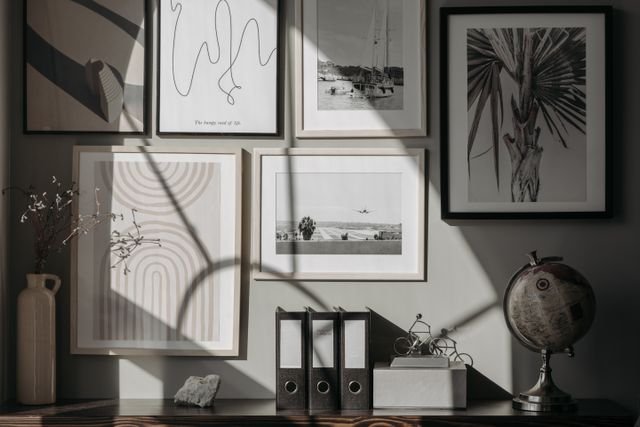
In my living room the gallery wall I finally built has seven pieces across one wall: three vintage botanical prints from the Biodiversity Heritage Library (free files, printed at A3 by a local print shop, in thin brass IKEA frames) two line art pieces from an Etsy seller whose work I’d been watching for months, and two photographic prints from Unsplash a coastal scene and a detail shot of worn stone steps I took myself and uploaded to Printed.com.
Total spend on files: about £16. Printing: about £35. Frames: about £70 across all seven. The whole wall cost just over £120, and I’ve had three people ask where I bought the art assuming it came from an independent gallery.
In the bedroom a single A2 minimal line art print of a botanical form in a wide mat and a thin black frame, above the bedside lamp. That one cost £4 for the file and £11 to print. The frame was £18. A £33 piece of wall art that looks like it cost £150.
Mistakes that are easy to make and easy to avoid
Downloading a low resolution file and hoping it prints sharp
It won’t. A file that looks clear on a laptop screen can be only 72 DPI fine for screens completely inadequate for printing. Always check the pixel dimensions of any file before downloading or buying. If a seller can’t or won’t tell you the file resolution, that’s your answer.
Printing on standard home printer paper and framing it as a display piece
Standard 80gsm printer paper even with good ink produces prints that look like printed paper. The absence of texture and the thinness of the substrate undermines the entire effect. If you’re going to frame it and hang it print on proper art paper or use a print shop. The difference in price is a few pounds; the difference in appearance is enormous.
Mixing too many frame styles in a gallery wall
One mistake that can undermine even the most carefully chosen printable wall art is mixing too many frame styles in a single gallery wall. Black, white, gold, wood, and ornate frames all together in one grouping looks chaotic rather than collected. Try to limit yourself to a maximum of two frame finishes in any one arrangement, and ideally just one. Consistency in framing is what makes a gallery wall with mixed subject matter look curated rather than accidental.
Hanging without measuring or using a template
Eyeballing the placement of multiple frames is almost always a mistake, especially when you have invested time in finding the right printable wall art. You will end up with uneven gaps, crooked lines, and more holes in the wall than you wanted. Instead, cut paper templates to the exact size of each frame, tape them to the wall with painter’s tape, and step back to assess. Adjust until everything looks right, then use the template centres to mark your nail positions. Ten minutes of preparation saves a lot of time filling unnecessary holes afterwards.