There is a bay window in our bedroom that I fell a little bit in love with the first time I saw the house. Big east facing three panes of glass looking out over the garden. I had an immediate vision of exactly what it could become, one of those beautiful window reading nooks you see in every cosy home photograph you have ever saved complete with cushions, a little lamp, and a well loved pile of books.
What it actually was for the first year we lived there, was a cold ledge where we put things that didn’t have anywhere else to go. A plant that needed more light. The spare lamp cable. Some books balanced uncertainly on a surface that was slightly too narrow to hold them properly.
The problem wasn’t lack of intention. It was lack of planning. I kept meaning to do something with it without ever sitting down and working out what that actually required. When I finally did properly with measurements, cushion depths and a bit of research into what makes a window seat genuinely comfortable rather than just decorative it took one weekend to create something I now use almost every morning.

What kind of window are you working with?
This is the first real question, because the answer changes almost everything about the approach. Window reading nooks are most associated with bay windows, but they’re genuinely achievable with several different window types just with different solutions.
Ideal
Bay window
The classic. Offers three sided light a natural alcove that already feels semi enclosed and usually enough depth to sit comfortably once a cushion is added. The easiest starting point for a reading nook.
Dormer window
Found in attic or loft rooms these sit within a deep recess in the roof slope. Often already have enough depth to sit in without any construction. One of the most naturally nook like window types.
Works well
Deep silled standard window
Many older properties have window sills deep enough 35cm or more to add a slim cushion and sit in. Doesn’t have the bay’s sense of enclosure but can be made into a perfectly functional reading ledge.
Recessed wall window
Some properties particularly older ones have windows set into thick walls that create a natural recess. With the right cushion and a curtain on each side these become genuinely cosy reading alcoves.
Needs work
Flush standard window
A window with a narrow or non existent sill flush with the wall. Can’t be sat in directly requires building out a bench or platform below the window. More of a DIY project than a styling one.
Corner or angled window
These create interesting light but awkward sitting positions. A bench built to follow the angle can work beautifully but requires more planning than a straightforward rectangular space.

The comfort elements that separate a real nook from a pretty ledge
The picture perfect window seat photographs you see saved thousands of times are often on closer inspection ones that would be genuinely uncomfortable to sit in for longer than about fifteen minutes. A thin cushion on a cold wooden ledge with nowhere to rest your back is a shelf not a reading nook. Here’s what actually makes one work:
Cushion depth of at least 8cm — Essential
One of the most important things to get right when creating window reading nooks is the cushion depth. Anything thinner than 8cm starts to feel like a painted bench within half an hour. For a seat you actually plan to use for reading 10 to 12cm of foam or cushion depth is the real minimum. Do not buy on aesthetics alone and always check the thickness specification before purchasing.
Back support of some kind — Essential
Comfortable window reading nooks always have some form of back support. A flat ledge with nothing to lean against requires you to hold yourself upright for the entire sitting period which stops feeling fine after about ten minutes. Side cushions wedged against the window frame a bolster pillow or even curtains you can lean into all solve this problem simply and effectively.
Proper reading light — Essential
Natural light is wonderful but it is also variable and unreliable. It disappears on overcast days and vanishes entirely in winter by mid afternoon. Adding a small adjustable lamp positioned beside or above your space is what separates window reading nooks that get used year round from ones that only work on sunny summer afternoons.
A small side table or ledge – Nice to have
Somewhere to put a drink and set your book down without having to move. Even a small folding tray table positioned beside the seat works if the space doesn’t allow for anything built in.
Storage underneath
A built in bench with lift up storage below is the premium version. Even a few baskets pushed under a freestanding bench achieve the same result somewhere books blankets and reading material live within reach.
Styles that work beautifully in different spaces
Natural and botanical
Linen cushions trailing plants on the sill woven baskets below the bench wooden accents. Works in almost any room and feels genuinely timeless. My own nook follows this direction.
Classic library
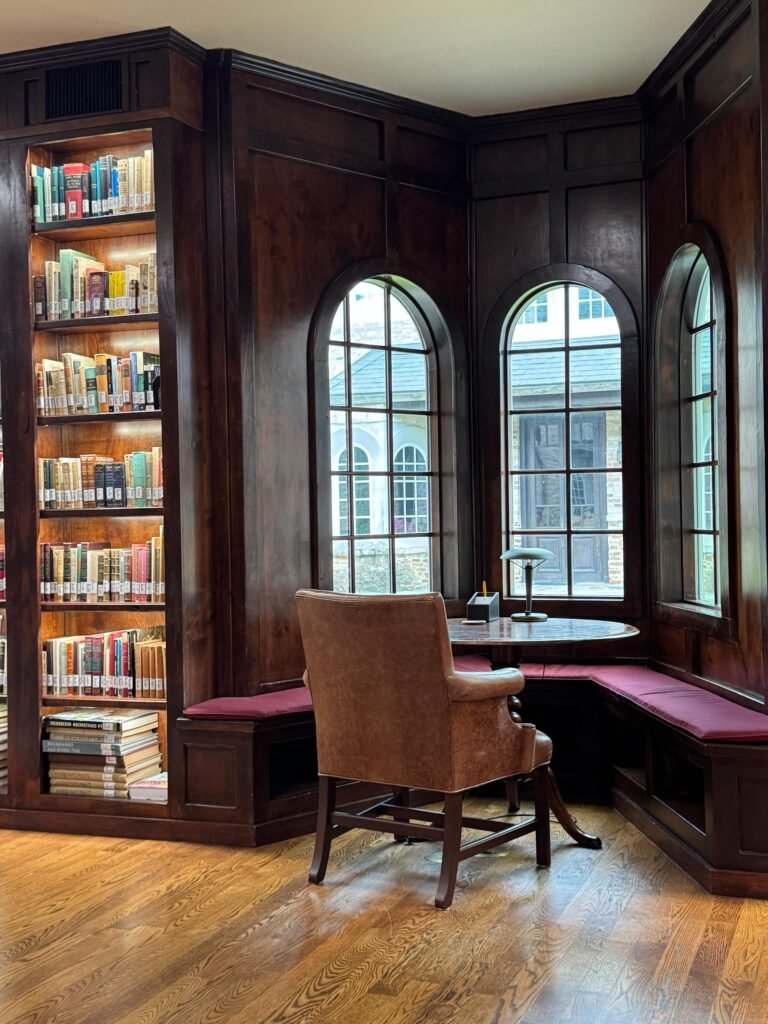
Dark wood rich jewel tone cushions wall mounted bookshelf beside the window a proper reading lamp with a warm shade. Best in a study or home office setting. Instantly feels like the reading spot from a novel.
Children’s magical nook
Fairy lights along the curtain rail bright cushions curtains that pull fully closed to create a den like space. Younger children especially love a nook that feels secret and contained. Add a small basket of books and you’ll find it becomes their default quiet spot.
Minimalist and modern
Clean white or grey cushions one plant, one lamp, and a simple throw folded neatly over the bench. No curtains, no clutter. This approach to window reading nooks is more architectural than cosy but it is very effective in contemporary interiors.
Moody and cocooning
Dark curtains, warm lamplight, velvet cushions, a candle on the sill. The evening version of the reading nook designed to be used after dark, not for morning light. Works particularly well in bedrooms.
Coastal / light filled
White painted bench blue and white cushions linen curtains shells or pebbles on the sill. Best suited to south facing windows with generous light. The most summer specific of the styles on this list.
Mistakes worth learning from before you start
Underestimating the cold factor
One of the most commonly underestimated problems with window reading nooks is the cold factor. A beautifully styled window seat positioned directly against single glazed or older double glazed windows will feel lovely in summer but genuinely too cold to sit in between October and April without some serious intervention. Before investing in cushions and styling, take a moment to assess how cold your window actually gets in winter.
Secondary glazing film applied to the inside of the frame costs around £15 per window and makes a real difference. Heavy curtains that properly enclose the space are another great option. Either way, getting this right is what separates a nook you use all year round from one you abandon the moment the temperature drops.
Making it beautiful before making it functional
The order of operations matters. Many people buy the cushion covers add the plants string the fairy lights, and then discover the seat is too shallow to sit in comfortably the light is wrong for evening reading, and there’s nowhere to put a cup of tea. Sort comfort and practicality first. Style is the final layer, not the foundation.
Choosing cushion fabric that can’t be cleaned
A window seat in a reading position means the cushion gets sat on daily potentially with drinks nearby and books being opened and closed around it. Velvet looks extraordinary and picks up every mark pet hair and crumb. Wipe clean or machine washable covers in a tightly woven fabric are far more practical. Many Bemz and Comfort Works covers are removable and washable a small detail that keeps the nook looking good without constant maintenance.
Making it too narrow to read sideways
One mistake people often make when planning window reading nooks is making the seat too narrow to read sideways comfortably. Reading in a window nook often means lying on your side with your legs stretched out, and that position requires at least 55 to 60cm of clear width to feel comfortable. If your bay or sill is narrower than this the nook will end up being used for sitting upright rather than proper relaxed sprawling which is a very different and far less satisfying experience. It is worth knowing exactly what position you are designing for before you commit to anything.