For the longest time, the wall just inside our front door was basically nothing. Coats piled up on a hook, shoes kicked into a vague pile, and post dumped wherever it happened to land. I never thought of it as a design problem because I never really thought of it as a space at all, just the bit you walk through to get to the rest of the house. It never occurred to me that something as simple as one of those small console tables could completely change how that entryway felt and functioned.
Then I stayed at my sister’s place and noticed her entryway had this narrow little table against the wall barely deeper than a shelf with a lamp a small bowl for keys and one plant. It took up almost no floor space. It solved the exact chaos my own hallway had. I went home that weekend and measured my wall.
That was the start of what I now think of as my console table phase. I’ve bought three of them since (one was a genuine mistake), used them in an entryway, behind a sofa, and in a weirdly awkward landing space upstairs. They are gram for gram one of the most useful pieces of furniture I own and one of the easiest to get wrong if you don’t think it through first.
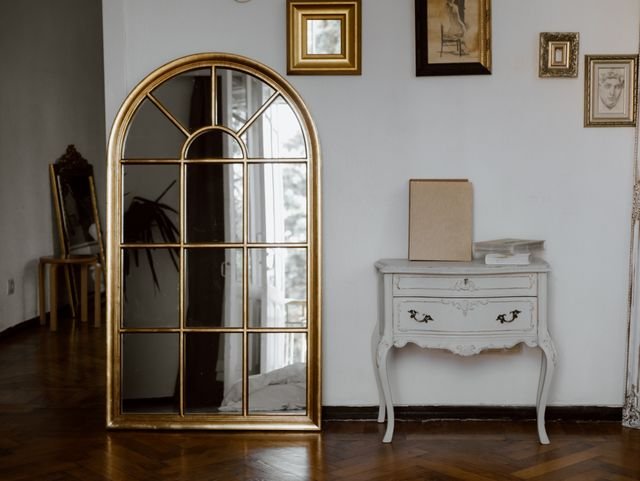
Where a small console tables actually earns its keep
Console tables get filed under entryway furniture most of the time, but that undersells them. The shape narrow often quite long usually without bulky sides makes them useful in spots where almost nothing else fits.
Entryway / hallway
The classic spot. Catches keys post, sunglasses. Gives you somewhere to put things down the second you walk in, which sounds small but changes daily life.
Behind the sofa
If your sofa floats in the middle of a room rather than backing onto a wall a console behind it adds a surface for lamps books or drinks without crowding the seating area.
Landing or stairwell
Awkward leftover space at the top of stairs is one of the best uses for a slim console. Adds a surface and breaks up a blank wall without obstructing the walkway.
Foot of the bed
In bedrooms with enough depth a low console at the foot of the bed works like a bench meets table somewhere to fold clothes or rest a tray, without the bulk of an ottoman.
Dining room sideboard substitute
In small dining rooms where a full sideboard won’t fit, a narrow console against the wall holds serving dishes, candles, or extra place settings during meals.
Under a TV or gallery wall
A long low console anchors a TV or art arrangement above it giving the eye somewhere to land and the wall a sense of composition rather than floating objects.
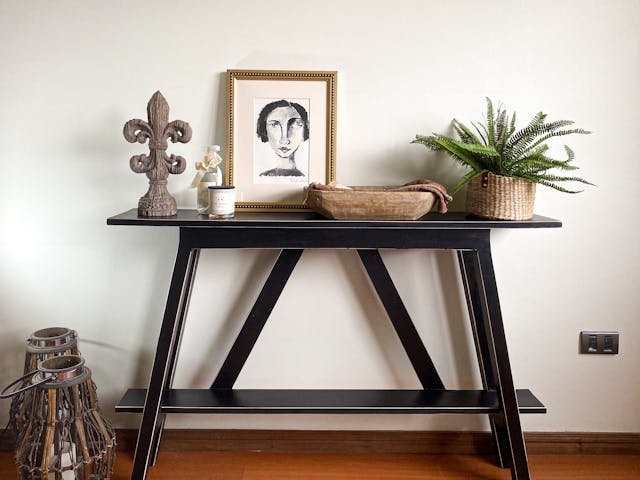
Choosing the right shape and style for your space
Slim rectangular
The most versatile shape. Works in almost any spot, holds the most styling items, and pairs with every interior style from modern to traditional.
Demilune (half moon)
Curved front edge that hugs the wall. Excellent for narrow hallways where every centimetre of walking space matters the curve avoids sharp corners catching hips or bags.
Console with drawers
More function slightly more depth required. Worth it if you actually need somewhere to stash keys dog leads or post out of sight rather than just on display.
Open shelf / no drawers
Visually lighter, often the better choice for very narrow spaces since there’s no drawer hardware to catch on anything. Great for plants, baskets, and books underneath.
Glass or acrylic top
Visually disappears more than a solid wood top, making it the best option for genuinely tiny entryways where every bit of perceived space counts.
Wall mounted floating console
No legs touching the floor at all. The ultimate solution for very tight hallways frees up the floor completely for cleaning and visual space. Needs proper wall fixing not just command strips.
Step by step: choosing and styling a small console table
Map the space before you shop
Measure the wall length, the depth available, and the walking clearance on the opposite side. Take a photo of the wall and sketch roughly where the table would sit, including any door swing, light switches, or radiators it needs to clear.
Decide what job the table needs to do
A console that’s purely decorative (styling a blank wall) can be slimmer and more delicate. One that needs to catch keys post and bags every day needs drawers or a shelf underneath and a surface tough enough to handle daily use without showing every scratch.
Choose a material that suits the traffic
When choosing a console table, pick a material that matches the amount of daily use it will receive. Small Console Tables made from solid wood, such as oak, walnut, or mango wood are strong, durable, and can handle everyday wear while developing character over time. Rattan and cane designs add a natural and stylish touch, but they may show signs of wear more quickly in busy entryways. For compact areas metal framed Small Console Tables with glass or marble tops are a practical choice because they are durable and create a light open look.
Tape it out before you buy
Before making a purchase test the size in your space. Use painter’s tape to mark the table’s dimensions on the floor and leave it there for a few days. This simple step helps you see how the table fits into your daily routine and can prevent costly mistakes or the hassle of returning an item later.
Style it in odd numbers varied heights
To create an attractive display style your Small Console Tables using items of different heights. A simple approach is to combine one tall item such as a lamp or vase with branches one medium sized item like a bowl, books, or a candle, and one smaller decorative piece such as a plant or key tray. Using a mix of heights and textures creates a balanced natural look that feels thoughtfully arranged rather than overly staged.
Real examples from rooms I’ve actually styled
In my own entryway, I chose a slim oak console table with a single drawer about 30 cm deep placed beneath a round mirror. Like many Small Console Tables, it provides practical storage without taking up too much space. The drawer keeps dog leads and spare keys neatly tucked away, while the top holds a ceramic bowl for mail, a lamp, and a small framed print leaning against the mirror. This simple setup transformed the hallway from a space people rushed through into an area that feels welcoming and thoughtfully designed from the moment you open the front door.
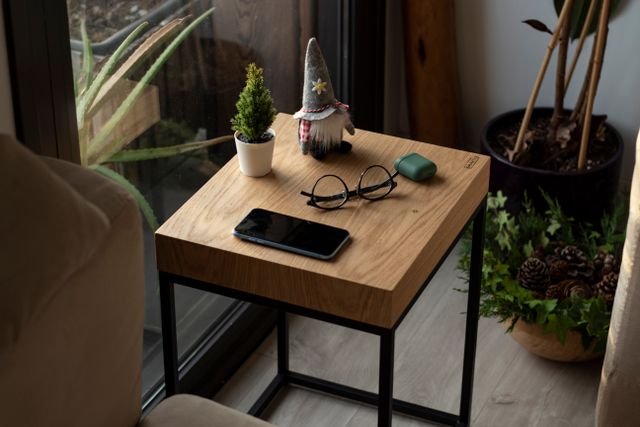
Behind my sofa which floats in the middle of an open plan living room I used a longer console about 120cm with open shelving underneath rather than drawers so books and baskets are visible rather than hidden. It gives the sofa a back without needing it pushed against a wall which opened up the whole layout of the room.
Mistakes worth avoiding
Buying based on width alone and ignoring depth
This was my first and most costly mistake. A console that’s the right width for your wall can still be unusable if it’s too deep for the available walking space. Always check depth first, width second.
Overstyling the top
It’s tempting to treat a console like a full shelf display five or six objects crowded together. In a small entryway especially, this reads as clutter the moment you’re carrying bags or trying to put keys down quickly. Less earns more here three to four items well chosen beats a crowded surface every time.
Mounting a wall hung console with the wrong fixings
Floating consoles can look stylish and modern, but they must be installed securely. If you’re considering wall mounted Small Console Tables, make sure they are fixed into wall studs or supported with heavy duty wall anchors that can safely handle the weight. Decorative screws alone are not enough for proper support. Before buying check the type of wall in your home and ensure it can accommodate the installation. If you’re unsure it’s best to hire a professional as this is one project where safety should always come first.