I found the chrome and vinyl dinette set for my vintage breakfast nook on Facebook Marketplace at eleven at night. It had cherry red vinyl seats and chrome legs, exactly like something out of a 1950s diner. The listing said estate sale, must go this weekend, so I messaged right away and drove forty minutes the next morning to collect it from a garage that smelled like decades of stored Christmas decorations.
I got it home put it in my kitchen nook and for about two weeks it looked incredible. Then I made the mistake almost everyone makes with vintage decor I kept adding. A reproduction Coca Cola sign. A jukebox style radio. Black and white checkered floor tiles I’d been eyeing for months. Within a month, my breakfast nook didn’t look vintage anymore. It looked like a theme restaurant that had run out of budget halfway through the renovation.
I had to pull it back, and pulling back taught me more about how vintage decor actually works than any amount of careful planning would have. Here’s what I learned, the mistakes that got me there, and how to build a vintage breakfast nook that feels like a genuine slice of history rather than a costume.
Which vintage are you actually going for?
This was the first thing I got wrong. Vintage isn’t one look it’s shorthand for at least five distinct eras, each with a completely different visual language. Mixing them without intention is how you end up with a nook that feels confused rather than curated.
1950s Diner Chrome and Vinyl
The chrome and vinyl diner style was the very first vintage breakfast nook look I started with. Think chrome legged tables, vinyl booth seats in bold colors like red, turquoise, or mint, laminate tabletops, and classic checkerboard floors. It is bold, graphic, and full of nostalgic charm, but it is honestly the easiest style to overdo if you are not careful.
Vintage Farmhouse Worn Wood and Gingham
The farmhouse style brings a much softer and more forgiving feel to a vintage breakfast nook. Reclaimed wood benches, ladder back chairs, gingham or floral cushions, and a few pieces of enamelware come together beautifully here. It is far easier to live with long term compared to the diner look and ages really nicely over time.
English Cottage Floral and Mismatched
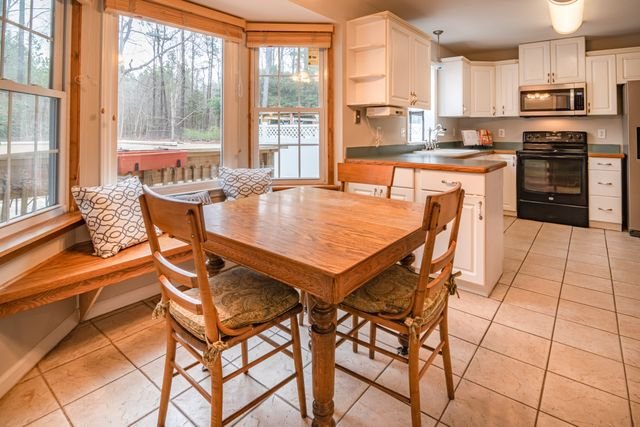
The English cottage style is where I eventually landed with my own vintage breakfast nook. Mismatched wooden chairs, floral fabric seats, a worn pine table, and willow pattern crockery displayed on open shelves all come together to create something warm, lived in, and deeply cozy. It feels less like a designed space and more like a room that has genuinely been loved over the years.
Art Deco Geometric & glamorous
Sunburst mirrors geometric tile patterns brass accents deep jewel toned upholstery. More formal and harder to source authentically, but striking when done well.
Building it step by step
Choose your one anchor piece first
Before anything else find the piece that will define the whole nook usually the table or the bench. Everything else gets built around it. My cottage nook’s anchor is a worn pine farmhouse table I found at an estate sale, with visible knife marks and a slightly uneven surface that I refused to sand out. That imperfection is the entire point.
Do not match your seating, mismatch it deliberately
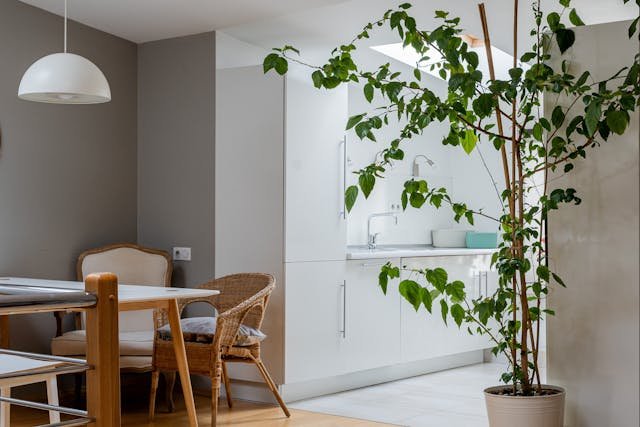
This is honestly the single biggest tell between a genuine vintage breakfast nook and a reproduction one trying too hard to look the part. Real vintage nooks rarely have matching chairs because the furniture naturally accumulated over time, replaced piece by piece as things broke or were inherited from family. Four different wooden chairs in similar tones, or even painted the same color for a bit of cohesion, reads as far more authentic than a perfectly matching set of four identical chairs ever could.
Source textiles that feel period appropriate, not costume-y
Gingham, ticking stripe, small floral prints, and faded linen all genuinely capture the feel of a true vintage breakfast nook without tipping over into novelty or costume territory. Try to avoid anything with overly cartoonish prints from the era, like poodle skirts or sock hop graphics, unless you are deliberately going for a kitsch diner theme on purpose. IKEA’s discontinued vintage style fabrics do turn up secondhand from time to time, and brands like Cath Kidston and Susie Watson Designs both make genuinely lovely reproduction florals if you want brand new fabric that still has that authentic vintage breakfast nook feel.
Layer in genuinely old smaller objects
This is where the authenticity really comes through. A set of mismatched vintage crockery on open shelving, an old enamel bread bin, a genuinely aged wooden breadboard, a milk glass vase. These small, real, used objects do more to sell the vintage feeling than any large furniture piece, because they show evidence of actual use over decades.
Get the lighting era appropriate too
A brand new brushed steel pendant light over a vintage farmhouse table breaks the spell completely. Look for genuine vintage light fixtures (often surprisingly affordable because they’re less soughtafter than furniture) or modern reproductions designed specifically to evoke the right era milk glass pendants gingham lampshades or simple schoolhouse style glass fixtures all work depending on your chosen era.
Combinations that work in real kitchens
Worn pine + sage green + white
Classic English cottage. Pine table, sage painted mismatched chairs white gingham cushions. Warm calm easy to live with daily.
Cherry red + cream + black
Classic diner palette, but use it sparingly. Red vinyl seats cream walls black and white floor accent not on every surface.
Teak + warm cream + charcoal
Mid century restraint. Walnut or teak table and chairs, cream cushions, a single charcoal accent (pendant light or rug). Clean and quietly retro.
Budget reality: vintage doesn’t have to mean expensive
- Worth investing in
- The anchor piece Your table or main bench. This is the foundation everything else builds around find the right one even if it takes months of searching.
- Reupholstery A genuinely good vintage chair frame with poor upholstery is worth professionally recovering rather than replacing entirely.
- Save here
- Crockery and small objects Charity shops car boot sales and Facebook Marketplace consistently offer genuine vintage pieces for a few pounds each.
- Textiles Vintage tablecloths and napkins are everywhere secondhand and almost always need just a wash. Avoid buying new vintage style versions at a premium.
- Skip entirely
- Reproduction novelty signage is honestly the fastest way to make your space feel like a theme restaurant rather than a real home. If you do want to add a sign to the space, try to source a genuinely old enamel advertising sign instead of a modern reproduction. It makes a surprisingly big difference and instantly feels more authentic.
Mistakes that are easy to make (because I made most of them)
Mixing too many eras in one space
Art deco mirror, farmhouse table, diner chairs individually lovely, collectively confusing. Choose your era and stay disciplined. If you fall in love with a piece from a different era, find it a home in another room rather than forcing it into the nook.
Over restoring and losing the patina
Sanding repainting or refinishing a vintage piece until it looks brand new defeats the purpose. The scratches the worn edges the slightly uneven surface that’s the character you’re paying for. Restore for structural integrity not for a showroom finish.
Forgetting that vintage doesn’t mean uncomfortable
Old church pews and vinyl diner seats can be genuinely uncomfortable for long meals. Add a properly fitted cushion (custom cut foam from a local upholstery shop, wrapped in your chosen fabric) rather than forcing everyone to sit on bare wood or thin original padding for the sake of authenticity. Comfort and character aren’t mutually exclusive.