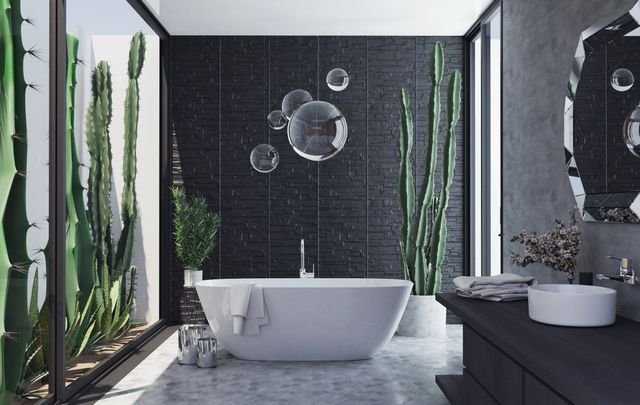
The first plant I ever tried as part of my bathroom plant decor was a cactus. I had read somewhere that cacti were practically indestructible and ideal for people who tend to forget about watering. What I had not thought about was that indestructible does not mean it will happily thrive in a windowless room filled with daily hot shower steam. That cactus went soft, drooped, and completely collapsed within six weeks. I was genuinely convinced that I had somehow managed to drown a desert plant, which felt like a very special kind of failure.
Since then I’ve tried probably fifteen different plants in various bathrooms across three different flats, and I’ve learned mostly through killing things which plants genuinely belong there and which ones just look good on Pinterest before quietly dying on your shelf.
The good news is that a bathroom is actually one of the best environments for a specific category of plant. You just have to know which category that is. Once I worked that out, my bathroom went from a plant graveyard to the greenest room in my flat and it genuinely transformed the way the space felt to be in.
Why bathrooms are harder than they look for plants
Before we get into which plants work it helps to understand what makes a bathroom a challenging environment. Because it’s not just about humidity that part is actually the advantage. It’s the combination of factors that trips people up.
Most bathrooms have limited or no natural light especially in flats and terraced houses where the bathroom faces an interior wall or the window is frosted glass. The temperature swings significantly cold first thing in the morning, steamy during showers cold again overnight. And many bathrooms have poor air circulation which can lead to stagnant moisture rather than the flowing humidity that tropical plants actually love.
Cacti and succulents hate all of this. They evolved in dry, bright, well-ventilated environments. A bathroom is their opposite. So does lavender, rosemary and most herbs despite what many bathroom plant lists will tell you, they need direct sun and dry air. Putting them in a humid low light bathroom is a slow death sentence.
The plants that actually thrive are those evolved for the floor of tropical rainforests low light high humidity indirect warmth. Once you’re shopping in that category, everything gets a lot easier.
The plants that genuinely work with honest notes on each
- Pothos Epipremnum aureum The most forgiving bathroom plant alive. Trails beautifully from shelves, tolerates near darkness loves humidity. My longest surviving bathroom plant going three years strong on a high shelf with zero direct light.
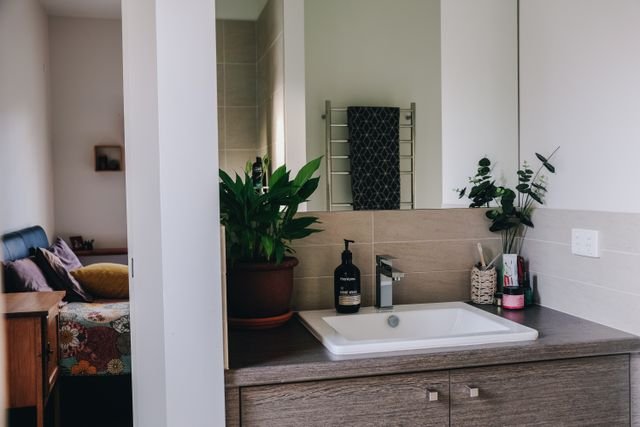
- Peace Lily Spathiphyllum One of the very few flowering plants that thrives in low light and humidity. Dramatically droops when it needs water (very helpful), then bounces back completely. White flowers add elegance to a dark bathroom.
- Snake Plant Sansevieria trifasciata Architectural striking almost impossible to kill. Tolerates low light and irregular watering. Doesn’t particularly love high humidity but tolerates it fine. Good for a corner that needs visual height.
- Spider Plant Chlorophytum comosum The spider plant is one of the most underrated choices for bathroom plant decor, mostly because it is so common that people tend to overlook it. It produces beautiful hanging babies that trail down naturally from high shelves, tolerates both humidity and low light really well, and grows fast enough to feel genuinely rewarding. My current bathroom has three of them and I could not imagine the space without them.
- Boston Fern Nephrolepis exaltata The Boston Fern is lush, beautiful, and honestly the ultimate bathroom plant decor statement. It loves humidity and thrives when placed near a shower, making it a natural fit for the bathroom environment. It does need a little more attention than a pothos and can drop leaves quite dramatically if it dries out, but with consistent misting it recovers fully and looks stunning again in no time.
- Monstera Monstera deliciosa and adansonii When it comes to bathroom plant decor, the Monstera adansonii, also known as the Swiss cheese plant with smaller leaves, is a far better choice for bathroom shelves than the full sized deliciosa. It loves warmth and indirect light and grows quickly enough to look genuinely impressive within just a single season. It is one of those plants that adds instant character and a lush tropical feel to any bathroom space.
Where to put them placement ideas that actually work
High shelf trailing down
A pothos or spider plant on a shelf at head height or above, allowed to trail down the wall or over the shelf edge. Creates the lush, overflowing look that defines the spa aesthetic without taking up counter space.
Windowsill (if you have one)
The most light available spot in the room. Spider plants Boston ferns and orchids all do well here. Frosted windows still provide enough diffused light for most of these don’t assume a frosted window means no light.
Corner floor plant
A snake plant or ZZ plant in a large pot in the corner provides architectural height and presence without competing for shelf or counter space. The floor position means it collects the most ambient humidity from showers.
Step by step: setting up bathroom plants properly from the start
Assess your light honestly before buying anything
Stand in your bathroom at noon. Look at the light level realistically not hopefully. If you can read a book comfortably without switching a light on you have low light. If you need the light on even during the day, you have very low light. If you have a clear window with morning or afternoon sun reaching the floor you have indirect light. This assessment determines almost everything else.
Start with one plant, not five
When it comes to bathroom plant decor, the impulse to buy a whole collection all at once is completely understandable but worth resisting. Start with just one plant that is well suited to your specific bathroom conditions and place it somewhere you will actually remember it exists. Observe it for a month. Does it look happy? Is it growing? Is it yellowing or dropping leaves? One plant tells you far more about your bathroom environment than a dozen plants all struggling at the same time ever could.
Choose the right pot and drainage setup
Good drainage is absolutely essential for any bathroom plant decor setup. Sitting in stagnant water causes root rot faster than almost any other mistake you can make. Either use a pot with drainage holes sitting in a saucer, or place a nursery pot inside a decorative outer pot with a layer of gravel at the bottom to catch any overflow. I personally use the second approach for all my bathroom plants, a decorative ceramic outer pot with a plastic nursery pot inside, lifted slightly on small pebbles. It looks great and keeps the roots healthy.
Get the watering frequency right for bathroom conditions
One of the most important things to understand about bathroom plant decor is that plants in high humidity rooms actually need less frequent watering than the same plant kept elsewhere. Because the air is already moist, they lose far less water through their leaves. Overwatering is by far the most common cause of bathroom plant death, not underwatering. Always check the soil with your finger before adding any water. About an inch down should feel completely dry before you water again. My pothos gets watered roughly every twelve to fourteen days in summer and even less in winter, and it is absolutely thriving.
Feed sparingly in growing season
Bathroom plants often grow more slowly than the same species in a brighter room which means they need less fertiliser. Over fertilising a slow growing bathroom plant burns the roots. A half strength liquid feed (Miracle-Gro or Baby Bio work fine) once every four to six weeks from March to September is enough. Nothing through winter.
Mistakes I’ve made so you don’t have to repeat them
Putting succulents and cacti in the bathroom
I’ve done this twice despite knowing better the second time. Both died. Succulents and cacti need bright direct light and low humidity a bathroom is the precise opposite of their natural habitat. No amount of choosing a sunny spot in a bathroom compensates for the humidity. Leave them on a south facing windowsill somewhere else in the house.
Using decorative pots with no drainage
One of the most common mistakes people make with bathroom plant decor is choosing beautiful decorative pots that have no drainage hole at the bottom. Without drainage, water has absolutely nowhere to go, the soil stays constantly wet, and root rot sets in within just a few weeks. The fix is simple though. Either drill a hole in the bottom of the pot, which is surprisingly easy to do with a tile bit on ceramic pots, or use the decorative pot as an outer cover only with a proper drained nursery pot sitting inside it. I learned this lesson the hard way after losing a peace lily I had become genuinely attached to, and it is not a mistake I have made since.
Putting plants too far from whatever light source exists
In a bathroom with one small frosted window, every metre you move a plant away from that window dramatically reduces the light it receives. A plant on a shelf directly beside the window might thrive. The same plant on a shelf across the room might barely survive. If you only have one light source, cluster your plants as close to it as looks good don’t scatter them for decorative effect at the expense of their survival.