When I got home, I looked at my own room with completely different eyes. It was cluttered not messy, just too much. Too much visual noise. So I started pulling things out. And I kept going. And now, two full redesigns later I want to share everything I’ve learned broken fixed and figured out along the way.
What Minimalist Room Design Actually Means
People confuse minimalist with empty. They’re not the same thing. A minimalist room has everything it needs and nothing it doesn’t. The goal isn’t to make a room look sparse it’s to make it feel calm and intentional. Every object earns its place.
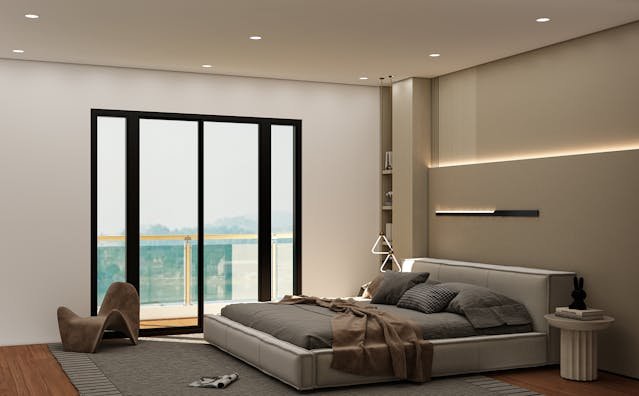
The great thing about minimalism is that it does not have just one look. Japanese wabi sabi minimalism embraces natural textures and the beauty of imperfection. Scandinavian minimalism feels warm and cozy through the use of wood and soft neutral tones. Contemporary minimalism is cleaner, sharper, and more architectural in its feel. But no matter which style you are drawn to, they all share one important quality and that is restraint. Knowing when to stop adding things to a space, even when there is still room for more, is really what minimalism is all about.
Where I Started (And Where You Should Too)
I didn’t start with shopping for new furniture or repainting walls. I started with a full clear out. Every single thing left the room. I put it all in the hallway and then I only brought back in what I actually used or needed.
- Empty the room entirely yes even the nightstand. Put it all somewhere else temporarily.
- Live with the empty room for a day. Sounds dramatic but it teaches you what you actually miss.
- Wait a week before adding anything decorative. Let the calm settle first.
The Furniture Rules I Wish I’d Known Earlier
When I did eventually replace some pieces, I made some expensive mistakes before landing on what actually works. Here’s the short version of lessons that cost me money to learn.
Low profile furniture changes a room more than you’d think. A bed frame that sits close to the floor opens up vertical space and makes ceilings feel taller. I switched from a high headboard platform to a simple solid wood low bed, and the room immediately felt like it had more air in it. Always chose simple furniture for minimalist room design.
What I use now
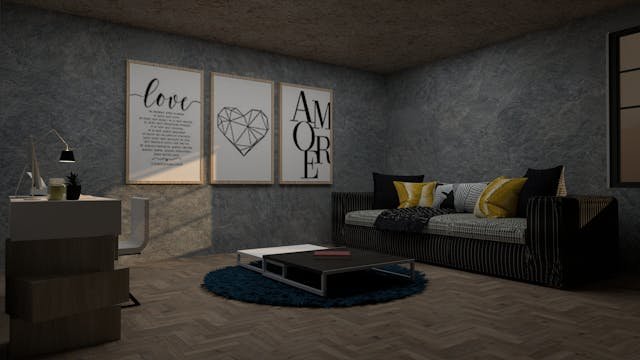
The dresser is a clean and simple Muji style piece I picked up at a secondhand shop. It has no branding, straight lines, and a natural wood finish which is exactly what I was looking for. The bed frame was made by a local carpenter, custom built to fit the space perfectly. If you are shopping for something similar, IKEA’s HEMNES line and HAY furniture are both great options to explore. They offer minimalist pieces that look and feel genuinely good without costing a fortune.
Multifunctional pieces earn extra points. An ottoman that opens for storage, a bench at the foot of the bed that holds extra blankets inside these are worth more in a minimalist room than two separate pretty objects.
Color: The Part That Intimidates Everyone
White walls are often the first thing people think of when it comes to minimalism, but they are not actually a requirement. What matters far more is that everything in the room feels cohesive and tied together. Start by choosing a quiet and understated base color, something like a soft white, warm greige, dusty sage, or muted clay, and stick with it throughout the room. From there, make sure your furniture, textiles, and smaller decorative objects all sit within roughly the same tonal family. When everything shares a similar color tone, the room naturally feels calm, balanced, and harmonious without you even having to try too hard.
My room now is all warm whites and sand tones with one piece of contrast: a matte black lamp. That’s the only hard contrast in the space. It took me a while to resist the urge to add more, but that restraint is exactly what makes the lamp feel considered rather than random.
Lighting Is Half the Room
This one gets skipped constantly, and it’s a shame because lighting does more for atmosphere than almost anything else. Overhead lighting is the enemy of a calm, minimalist space. It’s flat, it shows every corner equally, and it kills any sense of warmth. Lighting plays important role in minimalist room design.
In my bedroom, there is no ceiling light turned on after about 6pm. I use a single arc lamp in one corner and a small warm lamp on the nightstand. Both are on dimmers. The combination creates zones of soft light that feel completely different from the same room under overhead lighting.
Textiles: Where Minimalism Gets Its Warmth
If you want a minimalist room that doesn’t feel like a hotel corridor, textiles are your tool. Natural materials linen cotton wool jute add texture and warmth without visual complexity. They’re the softness that makes restraint feel livable instead of austere.
Keep the palette consistent. All my textiles are within the same warm neutral range off white, oat, soft taupe. No patterns. If you want a pattern, keep it subtle: a very quiet stripe or a barely-there texture weave at most.
Common Mistakes I Made (So You Don’t Have To)
Always avoid these mistakes for minimalist room design.
Mistake 01
Buying all white everything and calling it minimalist. White without texture or warmth is clinical, not calm.
Mistake 02
Removing everything including the things that actually bring me joy. Minimalism isn’t self punishment.
Mistake 03
Buying new minimalist furniture before clearing out old stuff first. The problem was always volume, not style.
Mistake 04
Ignoring cables and tech clutter. A simple room with a rat’s nest of cables behind the nightstand defeats the whole point.
Mistake 05
Not thinking about storage. Things need somewhere to go or they live on surfaces. Always solve storage first.
Mistake 06
Treating it like a one time project. Minimalism is ongoing. You have to keep editing. Things creep back in.
Apps and Tools That Actually Helped Me
Once I was past the clearing out phase and thinking more carefully about layout and color, a few tools became genuinely useful.
RoomSketcher is a free floor plan tool that let me experiment with furniture arrangement before moving anything heavy. I’d strong recommend doing this before committing to a layout I saved myself several hours of dragging furniture around by testing it on screen first.
When it came to figuring out my color palette, I created a Pinterest board with just 15 rooms that I genuinely loved. I was not saving images just because they looked pretty or well staged. I only saved the ones that made me feel truly calm and at ease when I looked at them. After a while, I started noticing clear patterns in what I had chosen and those patterns told me everything I needed to know about my own personal taste and style.
The One In One Out Rule
This is the maintenance piece that people skip, and it’s the reason most minimalist attempts eventually collapse. For every new thing that enters the room, something else has to leave. A new candle means an old one goes. A new book on the nightstand means yesterday’s book goes back on the shelf.
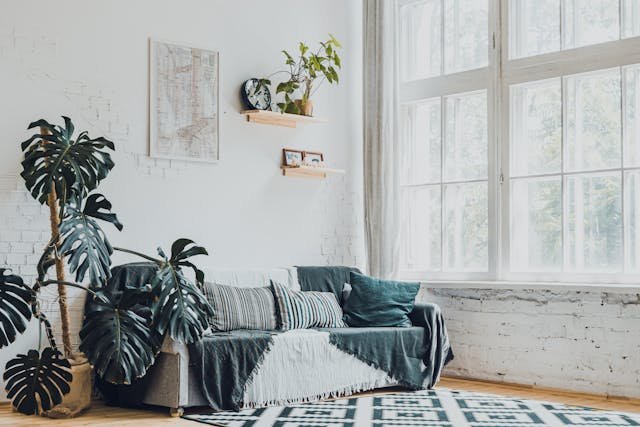
Every few months I like to do a little edit of my room where I look at everything with fresh eyes and ask myself one simple question: does this still belong here? It is a surprisingly honest exercise. Sometimes things that felt perfectly right six months ago have slowly stopped adding anything meaningful to the space. And when that happens, I let them go without overthinking it. It is one of the simplest habits you can build and it makes a big difference in keeping your space feeling clean, intentional, and truly yours.
Does It Actually Affect How You Feel?
This is the question I get asked most by skeptical friends. And honestly, yes more than I expected. There’s a real difference in how I feel walking into my bedroom now versus three years ago. It’s hard to describe without sounding a bit woo woo, but it’s a genuine reduction in low level cognitive noise.
None of that requires expensive furniture or a complete renovation. The biggest shifts came from removing things, not adding them. That’s the core counterintuitive truth of all of this.
Minimalism is not something you achieve once and then show off on Instagram. It is an ongoing and everyday practice of asking yourself whether the things around you truly belong there. Some days you will get it just right and some days a jacket will end up on the floor and sit there for a week. And that is completely fine. The room does not judge you for it. Just start small. Pick one corner, one surface, or simply make one decision to not add something new. Then let that quiet and calm feeling slowly build from there on its own.
About Umer Aziz
Umer Aziz is a dedicated content writer and blogger with
a deep interest in [HOME DECOR]. He believes in delivering accurate, practical,
and reader friendly information.
Learn more: [https://cozyhomedecoru.com/about/]
Contact: [contact@cozyhomedecoru.com]